|
|
Blogroll
|
|
Most recent articles |
|
Highlights |
|
States and Economies |
|
World economies: 15 of 50 largest economies are U.S. States: |
|
World States – Table 1 |
|
History and Society |
|
Fourth of July aboard the W.W. II aircraft carrier the U.S.S. Hornet |
|
A. L. Kroeber's The Civilization of California's Far Northwest |
|
The Arab Admiralty – and an Arab naval view of the Crusades |
|
Excerpt from “The Wife of Bath's Prologue” by Geoffrey Chaucer |
|
“Horsey” Vikings: exploring origin of the “Rohirrim” in The Lord of the Rings
|
|
The Battle of Crécy by Winston S. Churchill |
|
Monotheistic Paganism, or just what was it Christianity fought and faced? |
|
Medieval constipation advice for travelers: “A ripe turd is an unbearable burden” |
|
Alexis de Tocqueville's bicentennial: Anticipatory censorship in colonial America |
|
Antiquity vs. Modernity: Alexis de Tocqueville on the mind of the slaveholder vs. soul of America |
|
Federalism, and Alexis de Tocqueville on the origins of American democracy |
|
Science, Technology, Space |
|
Looking in the right direction – towards the future – with regard to global warming |
|
Know Your Neighborhood: from Andromeda to Fermions and Bosons |
|
Magnetars and Pulsars: Science's special section on pulsars |
|
The Geneva-Copenhagen Survey of Sun-like Stars in the Milky Way |
|
Galactic Central: the Black Hole at the Center of the Galaxy |
|
Politics and War |
|
America’s strong arm, wielding the Sword of Iraq, slays the multi-headed Hydra of Al Qaeda |
|
Regional and Personal |
|
Tamara Lynn Scott |
What wailing wight
Calls the watchman of the night?
William Blake
Whirl is king
Aristophanes
“Jumping into hyperspace ain't like dustin' crops, boy.”
Han Solo, another galaxy
|
Blogroll |
|
Grand Central Station |
|
Legal and Economic |
|
History and Society |
|
Science, Technology, Space |
|
Politics and War |
|
Eclectic |
|
Regional |
|
Reciprocal |
© Copyright 2002 – 2009
Michael Edward McNeil
Impearls: Earthdate 2009-08-29
| Cancer is an evolutionary process |
|
|
F1 Figure 1. Cancer is an evolutionary process. “The lineage of mitotic cell divisions from the fertilized egg to a single cell within a cancer showing the timing of the somatic mutations acquired by the cancer cell and the processes that contribute to them.” Further description of the figure from the Nature article quoted below: “Mutations may be acquired while the cell lineage is phenotypically normal, reflecting both the intrinsic mutations acquired during normal cell division and the effects of exogenous mutagens. During the development of the cancer other processes, for example DNA repair defects, may contribute to the mutational burden. Passenger mutations do not have any effect on the cancer cell, but driver mutations will cause a clonal expansion. Relapse after chemotherapy can be associated with resistance mutations that often predate the initiation of treatment.” |

An illuminating perspective on the nature of cancer has been achieved in that we now realize that cancer is itself the result of a process of biological evolution (random mutation plus natural selection) occurring amongst individual cells within the environment of one's own body.
A technical review article appearing in the renowned scientific journal Nature on the subject of the newly deciphered cancer genome lays out our recent understanding of the nature of cancer: 1
Cancer is an evolutionary process
All cancers are thought to share a common pathogenesis. Each is the outcome of a process of Darwinian evolution occurring among cell populations within the microenvironments provided by the tissues of a multicellular organism. Analogous to Darwinian evolution occurring in the origins of species, cancer development is based on two constituent processes, the continuous acquisition of heritable genetic variation in individual cells by more-or-less random mutation and natural selection acting on the resultant phenotypic diversity.
The selection may weed out cells that have acquired deleterious mutations or it may foster cells carrying alterations that confer the capability to proliferate and survive more effectively than their neighbours. Within an adult human there are probably thousands of minor winners of this ongoing competition, most of which have limited abnormal growth potential and are invisible or manifest as common benign growths such as skin moles.
Occasionally, however, a single cell acquires a sufficiently advantageous set of mutations that allows it to proliferate autonomously, invade tissues and metastasize.
Some people reject this concept, at least on first encounter, believing it to be, as one person put it, ”a misapplication of evolutionary theory,” because “cancerous changes in cells insure their own destruction rather than being passed on to the next [human] generation,” and “thus cancer is better understood as a malfunction [or degeneration] of cellular mechanisms rather than an evolutionary process.”
This argument is wrong, or at best an appreciation of only half of the dual interacting principles that are at work in the onset of cancer. In this regard, one might note that the authors of the foregoing Nature piece from which the earliest quotation was excerpted are highly experienced cancer researchers and thus hardly naive concerning this topic. Beyond that mere “argument from authority,” however, though genetic “malfunctions” (aka mutation) do of course occur, the development of cancer goes way beyond a mere haphazard accumulation of defects — which would indeed be inherently far less dangerous — rather, the creation of cancer is propelled by true evolutionary forces.
The typically negative changes that the bulk of accidental genetic modifications to complex biological systems (known as mutations) introduce, subsequently get filtered in living environments by natural selection (random mutations in combination with natural selection being collectively known evolution), leaving only the advantageous (or at least neutral) results behind — advantageous, that is (in the context we're discussing), for individual cell lineages, if not for the body as a whole — which steadily improves the cells of those lineages' reproductive and competitive standing within the body's increasingly diverse cellular environment.
Beyond that, however, taking the above objection at face value would mean that whenever a new species evolves/arises out of another to fit the environment in which it presently finds itself (for instance, humans with their big brains evolving during the last few million years out of stupider hominids) — but which evolutionary alterations happen to ensure that the environment afterwards changes or even is disrupted or destroyed by the actions of the newer species (such as people blowing up the world or making it unfit to live in due to pollution or global warming) so that the species subsequently becomes extinct — that the earlier adaptive changes resulting in the origin of that species would therefore have to be deemed not to have been “evolution”! Good to know; Creationists must therefore be right: humans didn't evolve! (End sarcasm.)
Discarding sarcasm, it's important to realize that body cells which are progressing towards a cancerous variety as a result of the dual actions of mutation and natural selection (i.e., evolution) are “fitter” — in that those cells successfully out-reproduce and out-compete for a considerable length of time their more unassuming compatriots within the bodily environment. It's not till much later (cellular time-wise) that the overall encompassing bodily environment could end up being destroyed as a consequence of the tumor that those cells may eventually grow into. In the meantime, those cells are responding to real evolutionary forces that propel their progression — not mere haphazard “degeneration.”
It can even occur on occasion that a cancerous line does not get wiped out along with its host! As it happens there is a variety of cancer in dogs known as canine transmissible venereal tumor (CTVT), also called Sticker's sarcoma (that one can learn about here 2), which, rather than being viral in nature as most infectious cancers are, actually consists of the mutated cells of the original dog that initially developed that variety of cancer, in the course of which somehow evolving the capability to survive and escape from its host, infecting other dogs thereafter in an endless chain, and thus as a result long outliving its original progenitor.
Ignoring the instance of the cancerous dog cell lineage that succeeded in escaping and outliving its bodily host whilst infecting dogs more generally — even more “ordinary” cancers that never manage to escape and live free of their host are remarkable as instances of the body's constituent cells (or rebel lineages of them) learning via evolution how to disobey the body's regulatory apparatus — in effect raising the “jolly roger,” taking up a life of independent piracy within the host, perhaps in the end by their free-wheeling activities killing off their formerly allied-to body.
A page at the University of California, Berkeley, titled “ Another perspective on cancer: Evolution within,“ puts the ultimate evolutionary origin of cancers succinctly: 3
[D]espite increased attention and funding, the cure for this and other cancers has remained notoriously elusive. Viewing cancer through the lens of evolution helps explain why a cure seems to remain just out of reach and points the way toward new treatments. Where's the evolution? Iconic examples of evolution (birds evolving from dinosaurs, hominids evolving an upright posture, or a lineage of lobe-finned fish evolving four legs and moving onto land) might seem unrelated to the growth of a cancerous tumor, but the process underlying them both — natural selection — is identical. We typically think of natural selection acting among individuals, favoring those carrying advantageous traits and making those traits more common in the next generation. However, the key elements of this process — variation, inheritance, and selective advantage — characterize not just populations of organisms in a particular environment, but also populations of cells within our own bodies. The cells lining your intestines, for example, are not genetically uniform; there is variation among them. Some of those cells have incurred chance mutations as they have divided. If one of those mutations (or a series of mutations) allows its bearer to evade cell death and reproduce more prolifically than others, it will pass that mutation on to its daughter cells, and cells bearing that mutation will increase in frequency over time. Like organisms in an ecosystem, cell lineages within one's own body compete for resources. A cell lineage that gains an advantage in that competition, accumulating mutations that allow it to grab extra resources and escape the body's control mechanisms, will proliferate and may evolve into a cancerous tumor.
One is reminded of renowned science fiction writer (as well as editor) John W. Campbell's chilling tale from 1938, “Who Goes There?” (subsequently made into the 1951 motion picture The Thing from Another World, remade as The Thing in 1982) in which a terrible alien menace, liberated from Antarctic ice, possessed (once unfrozen) the capability of taking over the substance of animal and man, incorporating it into its own flesh and being — whilst (contrary to eating and ingestion as we know it) continuing to present the devoured human or animal's semblance as a “doppelganger” or zombie of that individual. Thus, an entire kennel of dogs or barracks of humans could, in the context of that story, be surreptitiously consumed one by one and thereby incorporated into the newly revived alien life form.
The thing (pun intended) that saved the folk in that story was that every such subsumed (semblance of a) human or animal, though now fully part of the alien species, was ultimately still an individual that would fight for its own survival when threatened — and simply separating a small part (such as a bit of sampled blood) of the creature whenever its takeover of man or dog was suspected, and then “threatening” that sample (with a hot wire perhaps), would cause the newly separated being to recoil in its own defense (unlike untransformed people's blood), thus revealing the doppelganger.
As a character in story put it, initially blurting out the idea: 4
“Blood is tissue. They have to bleed; if they don't bleed when cut, then by Heaven, they're phoney from hell! If they bleed — then that blood, separated from them, is an individual — a newly formed individual in its own right, just as they — split, all of them, from one original — are individuals!”
“Get it, Van? See the answer, Bar?”
Van Hall laughed very softly. “The blood — the blood will not obey. It's a new individual, with all the desire to protect its own life that the original — the main mass from which it was split — has. The blood will live — and try to crawl away from a hot needle, say!”
It's extremely interesting, I think, that our own body cells turn out to be rather like Campbell's hypothetical alien menace, as they evolve on their own as individuals within one's own body toward an independent, if piratical, existence.
Realizing that cancer results from an evolutionary progression amongst the cells within one's own body provides an illuminating perspective with regard to the fundamental nature of cancer, revealing just why it is that cancer so often proves resistant to treatment (as cancerous cells simply evolve away from a given regimen unless every last tumor-generating cell is thereby destroyed), as well as suggesting a number of avenues along which the phenomenon may be mitigated, obviated, and (one hopes) ultimately defeated.
F1 Figure 1 from the Ref. 1 Nature article.
1 Michael R. Stratton, Peter J. Campbell, P. Andrew Futreal, “The Cancer Genome,” Nature, Vol. 458, Issue no. 7239 (9 April 2009 [2009-04-09]), pp. 719-724.
2 Carl Zimmer, “A Dead Dog Lives On (Inside New Dogs),“ The Loom, August 9, 2006 [2006-08-09].
3 “Another perspective on cancer: Evolution within,” October 2007 [2007-10], part of: “Understanding Evolution,” University of California, Berkeley.
4
John W. Campbell (under the pseudonym Don A. Stuart), “Who Goes There?”, August 1938 [1938-08], Astounding Science Fiction, Street & Smith Publications, Inc., New York.
Collected in: The Best of John W. Campbell, Edited with an introduction by Lester Del Rey, Nelson Doubleday, Inc., Garden City, New York, 1976, pp. 246-298; quote on p. 291.
Also collected in: John W. Campbell, Who Goes There?, Shasta Publishers, 1948.
Made into the motion picture The Thing from Another World, directed by Howard Hawks, Winchester Pictures, distributed by RKO Radio Pictures, 1951.
Remade as The Thing, directed by John Carpenter, distributed by MCA / Universal Pictures, 1982.
Labels: cancer, evolution, John W. Campbell, science fiction
Impearls: Earthdate 2007-09-21
| Replicators in a robust capitalist economy |
|
Volokh Conspiracist Ilya Somin has an interesting post on the question of “How Federal is Star Trek’s Federation?”, which you can read here. (See also my other post deriving from Ilya’s piece, which you can find here, or use up-thread/down-thread controls in the navigation panel above.)
Ilya gets into (and the comments further explore) questions like whether the Federation was socialistic (and during which period), while commenters raise the issue of just how the presence of technological replicators affects — perhaps even eliminates the meaning of — the Federation’s (or perhaps just humanity’s within it) economy.
I certainly agree with those in the thread who maintain that the mere advent of replicators per se isn’t going to eliminate economics nor an economy. In this regard, I was surprised no one (but me) recalled perhaps the granddaddy (SF) story concerning replicators’ possible effects on a vigorous capitalist economy — to wit, Ralph Williams’ (pseudonym of Ralph W. Stone) “Business As Usual, During Alterations,” from the grand old days (1958) of John W. Campbell, Jr.’s Astounding Science Fiction — which delves into many of the issues considered here.
In the story an alien interstellar society decides to bring down human civilization (then at a more or less mid 20th century stage of development) — quietly, without much of a fuss, so they can simply take over — by providing humanity with several instances of a functional replicator device, capable of replicating most anything (’cepting your baby or pet), including notably the devices themselves. In addition to brief instructions on their use, an inscription provides fair… “Warning! A push of the button grants your heart’s desire. It is also a chip at the foundations of human society. A few billion such chips will bring it crashing down. The choice is yours.”
So, naturally, as anybody would expect, the carefree capitalist society of the West (along with the rest of the world) immediately snatches up the new technology, oblivious to all warning (and all doomsayers), replicating everything in sight. But — funny thing — at least in the story, Western capitalist society and its economy doesn’t collapse. Oh, it goes through major changes, the basis of the economy turning on its head in only about a day, but it survives and thrives.
As the tale goes, from within the midst of the upheaval: 1
“Well, I’ve been thinking about it, he’s right, you know, not very many people will buy beans and chuck roast, when they can eat wild rice and smoked pheasant breast. So, you know what I’ve been thinking? I think what we’ll have to have, instead of a supermarket, is a sort of super-delicatessen. Just one item each of every fancy food from all over the world, thousands and thousands, all different—”
“It won’t work,” George said with weary kindness. “That’s what I’ve just been explaining to John here. Why should I buy my pickled hummingbird tongues from you, when I can keep a can on my own shelf and duplicate it ad nauseam?”
“Ad nauseam, that’s why,” Simond said earnestly. “Beans, you can eat every day. Pickled hummingbird tongues, you can’t. You know, when we first started selling these frozen TV dinners, we ran into something funny. The first couple of weeks, they’d go like crazy. Then they’d die. We’d change suppliers, same story. Hot, then cold. Finally, somebody got an idea. You take the Mexican dinner, that’s a good seller, I like it myself. You taste the first one, it’s delicious. The next, not quite so good. The third or fourth one, eating’s a chore, and by the tenth you can’t stand the sight of even the wrapper—”
“C rations,” I put in.
“That’s it, same thing. The trouble is, each one is as exactly like the other as they can be made. You eat one, you’ve had them all. So, we passed the word to our supplier. Now, he changes the formula every week, a little more pepper, a few less beans, a different cut of meat, so forth. People think they are getting the same thing, but it’s just enough different to keep them coming back for more.”
“I see what you mean,” I said thoughtfully. “In the past, we’ve sold standardization because it was a scarce commodity. Now, the shoe is on the other foot, we’ll sell diversity. Instead of offering the customer as choice of GE or Westinghouse refrigerator, we’ll offer a choice of any refrigerator built, anywhere—” a sudden thought struck me. “Damn it,” I said unhappily. “We still can’t get away from suppliers.”
“Not only that,” George offered helpfully. “Those samples you’re going to offer a choice of are practically all going to be hand-made models, remember that. Also, you’re not going to get away with duplicating them for nothing. I think you already broke the law when you duplicated the trademarks on those cartons. Even if you didn’t, it’s not going to take much extension of present legislation to make it illegal to copy any manufactured article without paying royalty.”
Not bad foresight from half a century ago into the stage we’re at now, I’d say, as a result of the advent of “replicators” in the computer software, game and media industries, not to speak of such things as automobiles that one can now have built incorporating a wide variety of individually tailored options.
Also, as longtime readers of Impearls are aware, farsighted physicist Freeman Dyson wrote a terrific piece concerning the likely impact of replicators (of a kind, both mechanical and biological) in his fascinating essay
“The World, The Flesh, and The Devil,”
which very much rewards perusing in its own right.
UPDATE: 2007-10-07 12:00 UT: A reader on another thread points to this site (scroll down to “The Duplicators” and “replicator”), which does mention Ralph Williams’ story. However, they then get it fundamentally wrong (kind of like Microsoft vis-a-vis the UNIX filesystem), missing one of the major lessons of “Business As Usual, During Alterations.”
As the site asserts: “Lacking that” (i.e., “some substance that cannot be replicated”) “there is no way to prevent either currency or cheques from being counterfeited. Counterfeits so good they cannot be distinguished from genuine money.”
This is incorrect, as Williams insightfully realizes.
On the contrary, while currency as such immediately becomes valueless with the advent of high-quality replicators, cheques (and charge cards) do not.
As the author points out, one can already (pre-replicators) write just as many bad cheques as one wants, and still end up in prison over it — that won’t change with replicators.
Thus, in his story the entire economy flips over instantaneously to consist solely of cheques, credit card and like transactions — no cash.
1 Ralph Williams (pseudonym of Ralph W. Stone), “Business As Usual, During Alterations,” originally published in John W. Campbell, Jr.’s (editor) Astounding Science Fiction, July 1958 [1958-07]. Reprinted in Prologue to Analog, edited by John W. Campbell, 1962, Doubleday & Company, Inc., Garden City, New York; pp. 230-258.
Labels: economics, replicator, science fiction
Impearls: Earthdate 2007-01-23
| Omnilingual – Antikythera Mechanism revealed |
|

A recent issue of the British scientific journal Nature (dated 2006-11-30) has several fascinating articles including a research report on the Antikythera Mechanism, in which a battery of powerful techniques including x-ray computed tomography, high-resolution surface examination together with much painstaking analysis have, more than a century after its discovery at the bottom of the sea, begun to reveal the fascinating secrets of this ancient device. As Jo Marchant puts it in her companion piece “In search of lost time”: 1
It looks like something from another world — nothing like the classical statues and vases that fill the rest of the echoing hall. Three flat pieces of what looks like green, flaky pastry are supported in perspex cradles. Within each fragment, layers of something that was once metal have been squashed together, and are now covered in calcareous accretions and various corrosions, from the whitish tin oxide to the dark bluish green of copper chloride. This thing spent 2,000 years at the bottom of the sea before making it to the National Archaeological Museum in Athens, and it shows.
But it is the details that take my breath away. Beneath the powdery deposits, tiny cramped writing is visible along with a spiral scale; there are traces of gear-wheels edged with jagged teeth. Next to the fragments an X-ray shows some of the object’s internal workings. It looks just like the inside of a wristwatch.
This is the Antikythera Mechanism. These fragments contain at least 30 interlocking gear-wheels, along with copious astronomical inscriptions. Before its sojourn on the sea bed, it computed and displayed the movement of the Sun, the Moon and possibly the planets around Earth, and predicted the dates of future eclipses. It’s one of the most stunning artefacts we have from classical antiquity.
No earlier geared mechanism of any sort has ever been found. Nothing close to its technological sophistication appears again for well over a millennium, when astronomical clocks appear in medieval Europe. It stands as a strange exception, stripped of context, of ancestry, of descendants.
Considering how remarkable it is, the Antikythera Mechanism has received comparatively scant attention from archaeologists or historians of science and technology, and is largely unappreciated in the wider world. A virtual reconstruction of the device, published by Mike Edmunds and his colleagues in this week’s Nature (see page 587), may help to change that. With the help of pioneering three-dimensional images of the fragments’ innards, the authors present something close to a complete picture of how the device worked, which in turn hints at who might have been responsible for building it.
Now that close to a comprehensive understanding of the Antikythera Mechanism has emerged from these studies, the picture of the revealed machine is astounding:
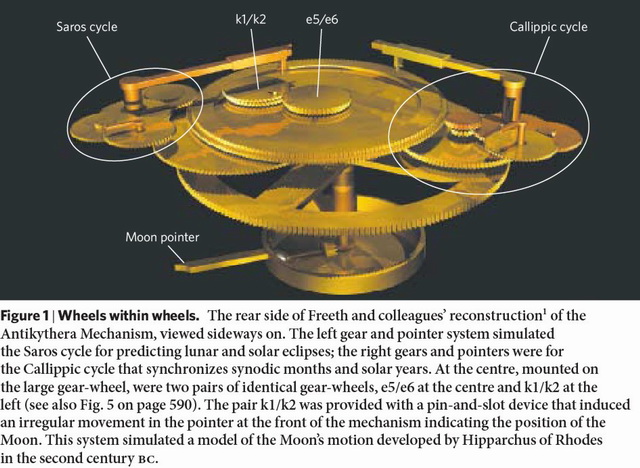
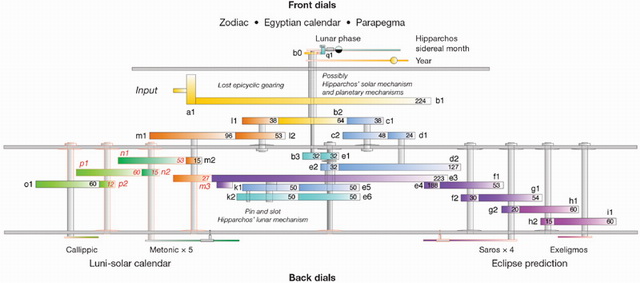
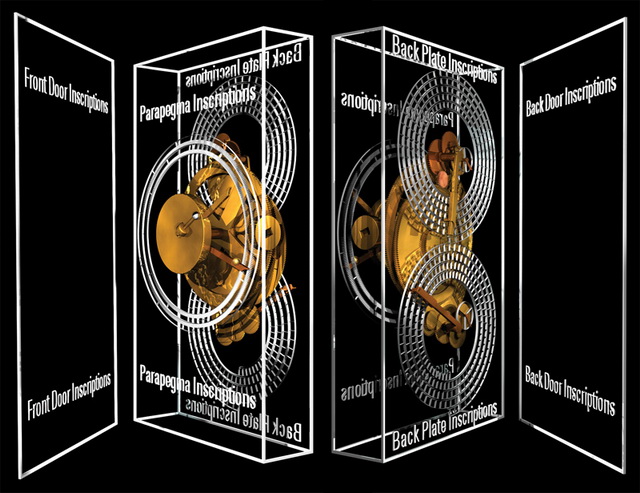
Reading the research report’s description of its analysis of the dials and inscriptions on the device is almost like reading an alternate history novel (a sequel to a book by L. Sprague de Camp, say, The Glory that Was), where science took off in antiquity and all this arcane technology that results is accompanied by an impressive Ancient Greek technical vocabulary… except that this is our timeline.
Prior to historians and archaeologists’ realization of what the Antikythera mechanism really was, scholars had no reason to think that ancients were aware of the principle of clockwork-like complex gearing at all. Via the 1st century b.c. Roman architect writer Vitruvius, we know that simple dual gearing, for directional change, was in use following this time frame in a type of water-powered mill. There are still no instances known of the use of gears of any type predating the Antikythera mechanism, however, nor anything of comparable sophistication for beyond a thousand years after.
A revealing excerpt from the Nature report, “Decoding the ancient Greek astronomical calculator known as the Antikythera Mechanism,” by Tony Freeth (Cardiff University, School of Physics and Astronomy), et al., reads as follows: 2
Named after its place of discovery in 1901 in a Roman shipwreck, the Antikythera Mechanism is technically more complex than any known device for at least a millennium afterwards. Its specific functions have remained controversial because its gears and the inscriptions upon its faces are only fragmentary. Here we report surface imaging and high-resolution X-ray tomography of the surviving fragments, enabling us to reconstruct the gear function and double the number of deciphered inscriptions. The mechanism predicted lunar and solar eclipses on the basis of Babylonian arithmetic-progression cycles. The inscriptions support suggestions of mechanical display of planetary positions, now lost. In the second century b.c., Hipparchos developed a theory to explain the irregularities of the Moon’s motion across the sky caused by its elliptic orbit. We find a mechanical realization of this theory in the gearing of the mechanism, revealing an unexpected degree of technical sophistication for the period.
The bronze mechanism (Fig. 1), probably hand-driven, was originally housed in a wooden-framed case of (uncertain) overall size 315 × 190 × 100 mm (Fig. 2). It had front and back doors, with astronomical inscriptions covering much of the exterior of the mechanism. Our new transcriptions and translations of the Greek texts are given in Supplementary Note 2 (“glyphs and inscriptions”). 2 The detailed form of the lettering can be dated to the second half of the second century b.c., implying that the mechanism was constructed during the period 150-100 b.c., slightly earlier than previously suggested. This is consistent with a date of around 80-60 b.c. for the wreck from which the mechanism was recovered by some of the first underwater archaeology. We are able to complete the reconstruction of the back door inscription with text from fragment E, and characters from fragments A and F (see Fig. 1 legend for fragment nomenclature). The front door is mainly from fragment G. The text is astronomical, with many numbers that could be related to planetary motions; the word “sterigmos” (ΣΤΗΡΙΓΜΟΣ, translated as “station” or “stationary point”) is found, meaning where a planet’s apparent motion changes direction, and the numbers may relate to planetary cycles. We note that a major aim of this investigation is to set up a data archive to allow non-invasive future research, and access to this will start in 2007. Details will be available on www.antikythera-mechanism.gr. 3
The back door inscription mixes mechanical terms about construction (“trunnions,” “gnomon,” “perforations”) with astronomical periods. Of the periods, 223 is the Saros eclipse cycle (see Box 1 for a brief explanation of astronomical cycles and periods). We discover the inscription “spiral divided into 235 sections,” which is the key to understanding the function of the upper back dial. The references to “golden little sphere” and “little sphere” probably refer to the front zodiac display for the Sun and Moon — including phase for the latter.
The text near the lower back dial includes “Pharos” and “from south (about/around) … Spain (ΙΣΠΑΝΙΑ) ten.” These geographical references, together with previous readings of “towards the east,” “west-north-west” and “west-south-west” suggest an eclipse function for the dial, as solar eclipses occur only at limited geographical sites, and winds were often recorded in antiquity with eclipse observations. Possibly this information was added to the mechanism during use.
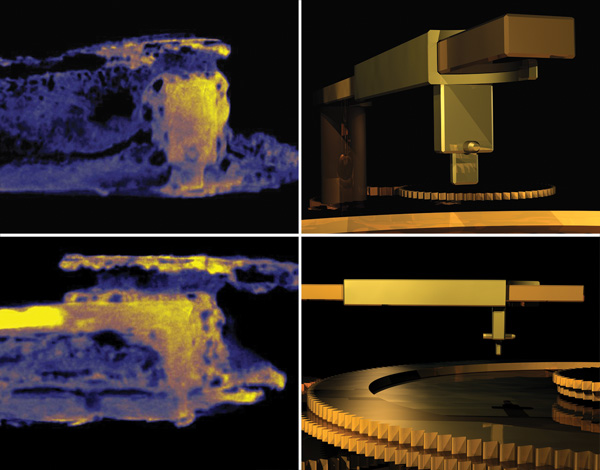
Turning to the dials themselves, the front dial displays the position of the Sun and Moon in the zodiac, and a corresponding calendar of 365 days that could be adjusted for leap years. Previously, it was suggested that the upper back dial might have five concentric rings with 47 divisions per turn, showing the 235 months of the 19-year Metonic cycle. A later proposal augments this with the upper subsidiary dial showing the 76-year Callippic cycle. Our optical and X-ray microfocus computed tomography (CT) imaging confirms these proposals, with 34 scale markings discovered on the upper back dial. On the basis of a statistical analysis analogous to that described for gear tooth counts below, we confirm the 235 total divisions. We also find from the CT that the subsidiary dial is indeed divided into quadrants, as required for a Callippic dial. In agreement with the back door inscription, we also substantiate the preceptive proposal that the dial is in fact a spiral made from semicircular arcs displaced to centres on the vertical midline. In the CT of fragment B we find a new feature that explains why the dial is a spiral: a “pointer-follower” device (Fig. 3) travelled around the spiral groove to indicate which month (across the five turns of the scale) should be read.
From our CT data of the 48 scale divisions observed in fragments A, E and F, we establish 223 divisions in the four-turn spiral on the lower back dial, the spiral starting at the bottom of the dial. This is the Saros eclipse cycle, whose number is on the back door inscription. The 54-year Exeligmos cycle of three Saros cycles is shown on the lower subsidiary dial.
Between the scale divisions of the Saros dial we have identified 16 blocks of characters, or “glyphs” (see Supplementary Note 2 (“glyphs and inscriptions”)) at intervals of one, five and six months. These are eclipse predictions and contain either Σ for a lunar eclipse (from ΣΕΛΗΝΗ, Moon) or Η for a solar eclipse (from ΗΛΙΟΣ, Sun) or both. A correlation analysis (analogous to DNA sequence matching) with historic eclipse data (all modern eclipse data and predictions in our work are from this reference) indicates that over a period of 400-1 b.c., the sequence of eclipses marked by the identified glyphs would be exactly matched by 121 possible start dates. The matching only occurs if the lunar month starts at first crescent, and confirms this choice of month start in the mechanism. The sequences of eclipses can then be used to predict the expected position of glyphs on the whole dial, as seen in Fig. 4. The dial starts and finishes with an eclipse. Although Ptolemy indicates that the Greeks recorded eclipses in the second century b.c., the Babylonian Saros canon is the only known source of sufficient data to construct the dial. […]
Of particular note is the dual use of the large gear, e3, at the back of the mechanism, which has found no use in previous models. In our model, it is powered by m3 as part of a fixed-axis train that turns the Saros and Exeligmos dials for eclipse prediction, and also doubles as the “epicyclic table” for the gears k1, k2. These are part of the epicyclic gearing that calculates the theory of the irregular motion of the moon, developed by Hipparchos some time between 146 and 128 b.c. (ref. 22) — the “first anomaly,” caused by its elliptical orbit about the Earth. The period of this anomaly is the period from apogee to apogee (the anomalistic month). To realize this theory, the mean sidereal lunar motion is first calculated by gears on axes c, d and e and this is then fed into the epicyclic system. As explained in Fig. 6, a pin-and-slot device on the epicyclic gears k1 and k2, clearly seen in the CT, provides the variation. This was previously identified, but rejected as a lunar mechanism. The remarkable purpose of mounting the pin-and-slot mechanism on the gear e3 is to change the period of variation from the sidereal month (that is, the time taken for the moon to orbit the Earth relative to the zodiac), which would occur if k1 and k2 were on fixed axes, to anomalistic month — by carrying the gears epicyclically at a rate that is the difference between the rates of the sidereal and anomalistic months, that is, at the rate of rotation of about 9 years of the Moon’s apogee.
Gears with 53 teeth are awkward to divide. So it may seem surprising that the gearing includes two such gears (f1, l2), whose effects cancel in the train leading to the Saros dial. But the gearing has been specifically designed so that the “epicyclic table” e3 turns at the rate of rotation of the Moon’s apogee — the factor 53 being derived from the calculation of this rotation from the Metonic and Saros cycles, which are the bases for all the prime factors in the tooth counts of the gears. The establishment of the 53-tooth count of these gears is powerful confirmation of our proposed model of Hipparchos’ lunar theory. The output of this complex system is carried from e6 back through e3 and thence, via e1 and b3, to the zodiac scale on the front dial and the lunar phase mechanism. Our CT confirms the complex structure of axis e that this model entails.
The Antikythera Mechanism shows great economy and ingenuity of design. It stands as a witness to the extraordinary technological potential of Ancient Greece, apparently lost within the Roman Empire.
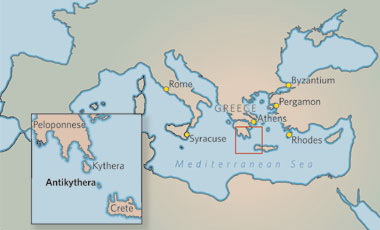
Intriguing questions demanded by the mere existence of an ancient device of the sophistication and elegance of the Antikythera mechanism, of course, include where did it come from, and who built it? The wreck on which the toponymically named mechanism was found, had foundered off the island of Antikythera, lying at the western extremity of the Aegean Sea directly astride important trade routes connecting the Aegean — places like Rhodes, a principal trading entrepot, along with points east and north (e.g., Pergamon) — with the western Mediterranean, most importantly the city of Rome itself. Given the cargo of luxury goods aboard (originating to the east of the ship’s final resting place), it seems very likely that the vessel was indeed bound west, quite probably for Rome, when it abruptly sank in 42 meters (138 feet) of water.
Where then did the mechanism originate and who might have made it? A clue is provided by the fact that in addition to the famous mechanism the ship also carried luxury trade goods which have been identified as originating at Rhodes, as well as other goods that are from Pergamon but which may have been transshipped through Rhodes. As noted before, the Antikythera device itself contains an algorithm built-in to express the “first anomaly” of lunar motion which was worked out in the 2nd century b.c. by the Greek astronomer Hipparchos — perhaps greatest of ancient Greek astronomers; who indeed did much of his work at Rhodes — and on which island afterwards the philosopher Poseidonius (contemporaneously regarded as the most learned man of his age; who did astronomical work himself, and at one point instructed Cicero at Rome) established a school.
Hence the hypothesis that Poseidonius’ school at Rhodes developed the technological traditions — that may have been directly influenced by Hipparchos himself, and which must have taken a good long while to gestate, as the Antikythera mechanism clearly didn't spring whole-cloth out of nowhere — leading to the construction of the machine and others like it; one of which was sent off to Rome.
It never made it, and the rest is (latter day) history.
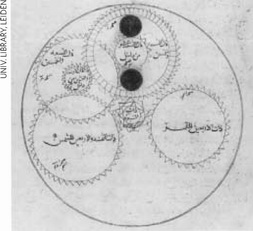
Beyond its jaw-dropping technology and fascinating provenance, the question of what effect the discovery and decipherment of this ancient technology has on our understanding of history itself, as Jo Marchant observes in her Nature companion piece, is perhaps even more intriguing. As she notes, prior to the Antikythera device it was believed that the advent of clockwork-type mechanisms in 14th century Medieval Europe represented the invention of this fundamental technology at around something like that time frame. Since Antikythera, however, a geared 6th century a.d. Byzantine sundial with four surviving gears (and which probably originally incorporated at least eight) has turned up; 4, 5 while the Medieval Persian scholar/scientist al-Biruni described a “box of the Moon” that is quite like the Byzantine device. (See at right an illustration of an eight-geared lunisolar calendar from al-Biruni’s astrolabe treatise of 996 a.d.) Such an augmented astrolabe from 13th century Iran is still extant today. The step from that to the clocks of 14th century Europe is chronologically and technologically short.
Thus, the history of gearing and clockwork is being revolutionized. Instead of originating late in the Medieval era, as previously assumed (in a form we now see as suspiciously like that of the Antikythera mechanism), now it appears likely that the tremendously sophisticated gearwork that we see reflected in this machine continued to survive in some form in the Greco-Roman world, as displayed in the 6th century Byzantine device; from whence it found a refuge somewhere during the early Medieval period — perhaps in the Baghdad Caliphate — and it may well be that (after say the Mongol destruction of Baghdad during the 13th century) this technology thereupon migrated with scholarly refugees and ended up influencing the West’s own technological trajectory a century or so later.
As François Charette observes in his Nature companion piece “High tech from Ancient Greece,”
6
all this is not unlike us one fine day discovering that steam engines had actually been invented during the Renaissance, and Newcomen and Watt’s invention of improved steam engines during the 1700’s unbeknownst to us had ultimately derived from that.
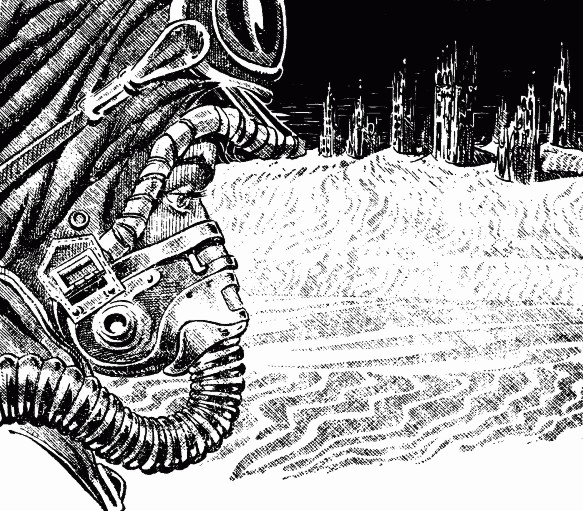
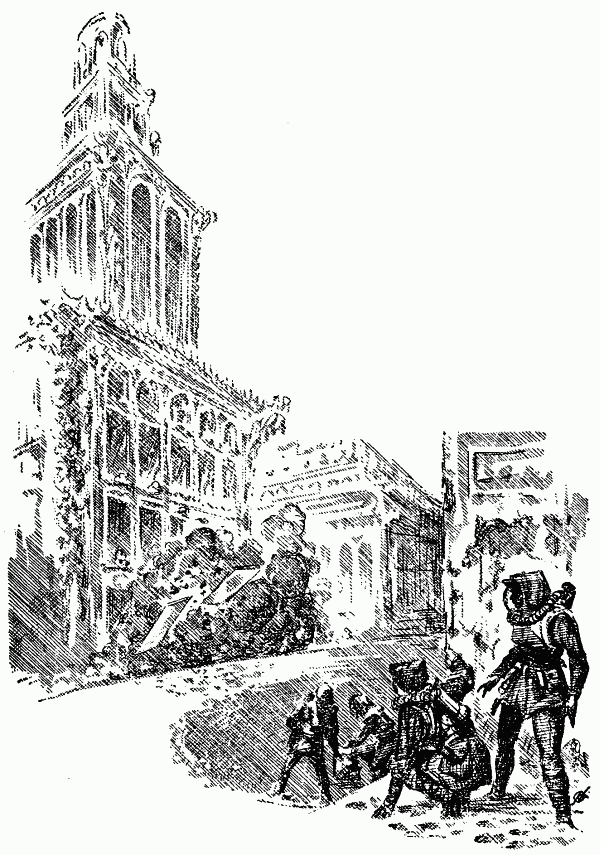
An echo with speculative literature is found in the way that the deciphering of the Antikythera mechanism utilized such details as the number of teeth in the assorted gears (unique ratios identifying which heavenly phenomena are being computed or charted on the dials of the machine) along with such things as historic eclipse patterns (the Saros canon) as important indicators of its meaning and function and aids in reconstruction of the design. This sense of using natural law and natural history as one’s keys to the decipherment, is very much akin to a classic science fiction tale from half a century ago, in which scientists investigating the remains of a disappeared alien race and civilization on their home world (Mars), in attempting to decipher their language — which seemed inherently almost impossible due to lack of a “Rosetta stone&rdquo (like the original that assisted in the decipherment of Ancient Egyptian) — ultimately came to realize that science (natural law), knowledge of which was embedded in the technology and writings of the science-savvy aliens, would serve as their universal Rosetta stone.
That story is “Omnilingual” by H. Beam Piper, 7 first published just fifty years ago, in the February 1957 (1957-02) issue of the extremely influential science fiction magazine then known as Astounding Science Fiction, altered a few years later to the still-extant name of Analog. Astounding/Analog for many years was under the inspired editorship of very well-regarded science fiction author John W. Campbell, Jr. — who has since become even better known as the “father of modern science fiction,” as a result of his tutelage and inspiration of a whole generation and host of talented writers — Heinlein, Asimov, Clarke, van Vogt, Poul Anderson, the list goes on and on…. Piper’s story, I’d venture to suggest, shows every sign of having profited from Campbell’s famous idea generation process vis-a-vis his authors.
(“Omnilingual” is no longer under copyright today, and can be accessed, with its original Kelly Freas illustrations from Astounding and blurb by John Campbell, at Project Gutenberg.)
The story concludes with the archaeologists reveling in having finally begun comprehending the rudiments of the structure of the Martians’ language, using the periodic table of the elements as a starting point — in the course of which Martha Dane compliments one of her colleagues:
“You said we had to find a bilingual,” she said. “You were right, too.”
“This is better than a bilingual, Martha,” Hubert Penrose said. “Physical science expresses universal facts; necessarily it is a universal language. Heretofore archaeologists have dealt only with pre-scientific cultures.”
As we see with the Antikythera mechanism, one need not go to Mars or Alpha Centauri to encounter a scientific culture in archaeology. However, one can’t help but wonder… had any of the scientists who deciphered the Antikythera machine read “Omnilingual,” lo these many years before or at some moment since? Did it influence their work, or even career; did they realize they were retracing the steps, in a sense performing the verification of a scientific hypothesis, which is implicit in the story?
Nature, Vol. 444, No. 7119 (issue date 2006-11-30), Editor's Summary of Antikythera articles: http://www.nature.com/nature/journal/v444/n7119/edsumm/e061130-09.html
1 Jo Marchant, “In search of lost time,” Nature, Vol. 444, Issue No. 7119 (issue dated 2006-11-30), pp. 534-538; doi:10.1038/444534a. See also Box 1: Raised from the depths.
2 T. Freeth, Y. Bitsakis, X. Moussas, J. H. Seiradakis, A. Tselikas, H. Mangou, M. Zafeiropoulou, R. Hadland, D. Bate, A. Ramsey, M. Allen, A. Crawley, P. Hockley, T. Malzbender, D. Gelb, W. Ambrisco, and M. G. Edmunds, “Decoding the ancient Greek astronomical calculator known as the Antikythera Mechanism,” Nature, Vol. 444, Issue No. 7119 (issue dated 2006-11-30), pp. 587-591; doi:10.1038/nature05357. Also, Figures and Tables, Supplementary Information, and Box 1: Astronomical cycles known to the Babylonians.
3 Antikythera Mechanism Research Project: http://antikythera-mechanism.gr/
4 J.V. Field and M.T. Wright (both of The Science Museum, London, SW7 2DD, England), “Gears from the Byzantines: A portable sundial with calendrical gearing,” Annals of Science, Taylor & Francis, Vol. 42, Issue No. 2, issue dated 1985 March (1985-03), pp. 87-138; doi: 10.1080/00033798500200131.
5 Francis Maddison (Curator of the Museum of History and Science, Oxford OX1 3AZ, UK), “Early mathematical wheelwork: Byzantine calendrical gearing,” Nature, Vol. 314, Issue No. 6009 (issue dated 1985-03-28), pp. 316-317; doi: 10.1038/314316b0.
6 François Charette, “High tech from Ancient Greece,” Nature, Vol. 444, Issue No. 7119 (issue dated 2006-11-30), pp. 551-552; doi:10.1038/444551a.
7 H. Beam Piper, “Omnilingual,” Astounding Science Fiction (subsequently Analog), February 1957 (1957-02) issue.
Labels: ancient history, science, science fiction
| (Blank last screen) |
|

![[Powered by Blogger]](http://buttons.blogger.com/bloggerbutton1.gif)
2002-11-03 2002-11-10 2002-11-17 2002-11-24 2002-12-01 2002-12-08 2002-12-15 2002-12-22 2002-12-29 2003-01-05 2003-01-12 2003-01-19 2003-01-26 2003-02-02 2003-02-16 2003-04-20 2003-04-27 2003-05-04 2003-05-11 2003-06-01 2003-06-15 2003-06-22 2003-06-29 2003-07-13 2003-07-20 2003-08-03 2003-08-10 2003-08-24 2003-08-31 2003-09-07 2003-09-28 2003-10-05 2003-10-26 2003-11-02 2003-11-16 2003-11-23 2003-11-30 2003-12-07 2003-12-14 2003-12-21 2003-12-28 2004-01-04 2004-01-11 2004-01-25 2004-02-01 2004-02-08 2004-02-29 2004-03-07 2004-03-14 2004-03-21 2004-03-28 2004-04-04 2004-04-11 2004-04-18 2004-04-25 2004-05-02 2004-05-16 2004-05-23 2004-05-30 2004-06-06 2004-06-13 2004-06-20 2004-07-11 2004-07-18 2004-07-25 2004-08-22 2004-09-05 2004-10-10 2005-06-12 2005-06-19 2005-06-26 2005-07-03 2005-07-10 2005-07-24 2005-08-07 2005-08-21 2005-08-28 2005-09-04 2005-09-11 2005-09-18 2005-10-02 2005-10-09 2005-10-16 2005-10-30 2005-11-06 2005-11-27 2006-04-02 2006-04-09 2006-07-02 2006-07-23 2006-07-30 2007-01-21 2007-02-04 2007-04-22 2007-05-13 2007-06-17 2007-09-09 2007-09-16 2007-09-23 2007-10-07 2007-10-21 2007-11-04 2009-06-28 2009-07-19 2009-08-23 2009-09-06 2009-09-20 2009-12-13 2011-03-27 2012-01-01 2012-02-05 2012-02-12